 blog
Hardwood Floor Refinishing vs Replacement Cost Guide
Table of Contents
- Hardwood Floor Refinishing vs Replacement Cost: What Actually Decides It
- Like-for-Like Cost Comparison: Refinishing vs Replacement Assumptions
- What Drives Hardwood Floor Refinishing Cost
- What Drives Hardwood Floor Replacement Cost
- Engineered Hardwood Refinishing: Wear Layer Limits and When It Works
- Hardwood Floor Refinishing Timeline, Disruption, and Household Logistics
- Lifecycle Cost: What Each Option Costs You Over 30 Years
- Floor-Specific Decision Guide: Which Route Fits Your Situation
- Frequently Asked Questions
Last Updated: October 14, 2026
Hardwood Floor Refinishing vs Replacement Cost: What Actually Decides It
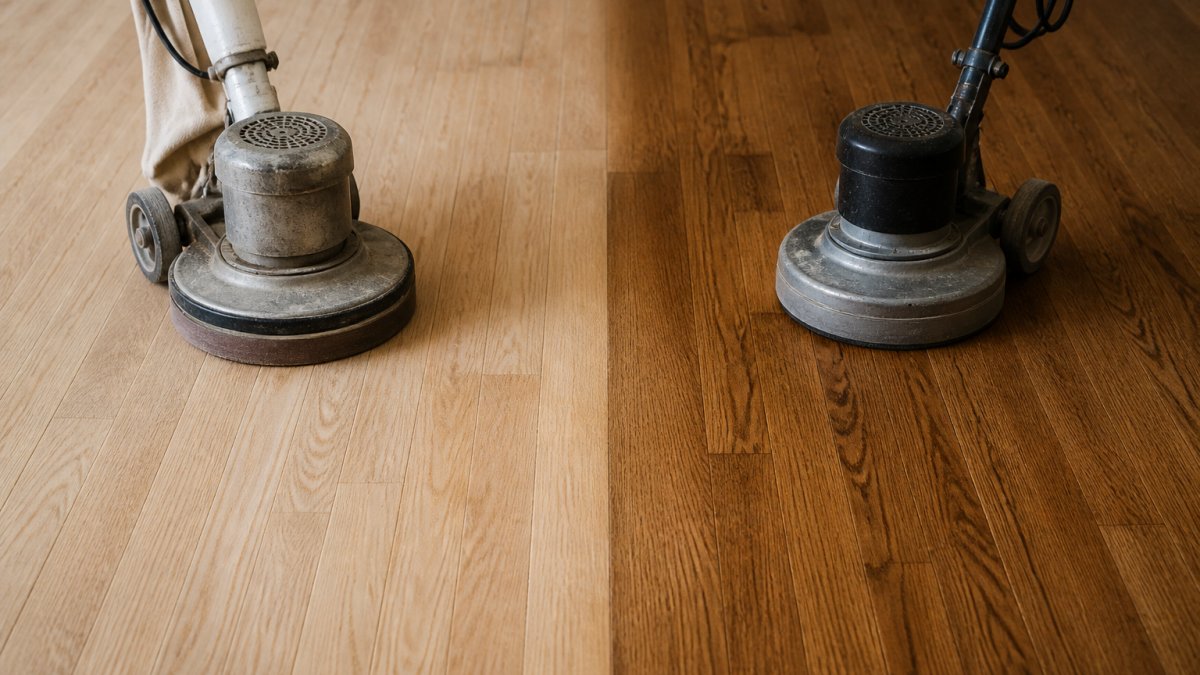
Hardwood floor refinishing vs replacement cost comes down to one question: how much sound wood is left above the tongue. Refinishing sands away the worn surface and restores the finish. Replacement tears out boards that may have decades of life left. At North American Hardwood, we have spent 38 years refinishing, installing, and repairing hardwood floors, and the honest answer is that cost alone rarely settles it. Condition does.
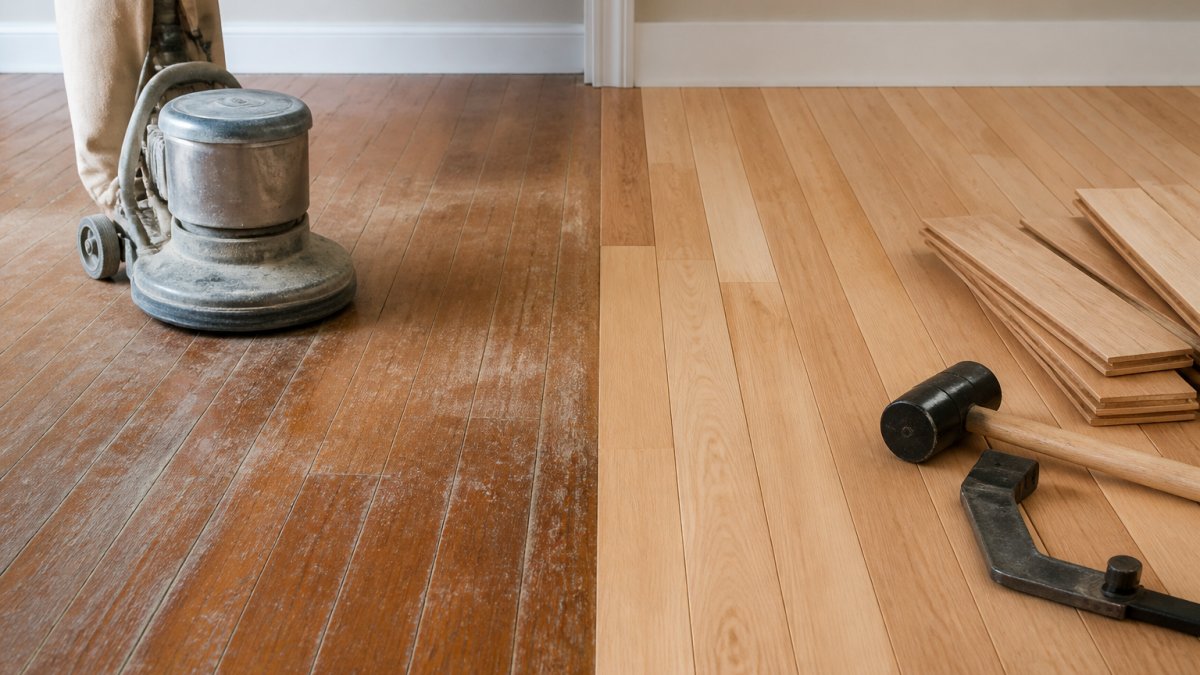
Here is the tension most quotes hide. A refinish and a replacement can land in a similar range on paper, yet they buy you very different things. One restores the floor you already own. The other starts over. Below, we break down what actually drives each price, where the two cross over, and how to tell which route your floor needs.
The Three Questions That Settle the Decision
Three questions decide almost every case. First, how thick is the wear layer? Second, how deep does the damage run? Third, how many times has the floor already been sanded?
A floor with a healthy wear layer and surface-level wear is a refinishing candidate. A floor with cupped, rotting, or water-swollen boards is usually not. Answer these three honestly and the cost comparison becomes much simpler.
Like-for-Like Cost Comparison: Refinishing vs Replacement Assumptions
A fair refinishing vs replacement comparison has to compare the same square footage, the same rooms, and the same finish expectations. Most quotes fail this test. They compare a basic refinish against a premium replacement, or the reverse.
State your assumptions out loud before you compare:
- Same total square footage in both scenarios
- Same finish type on both sides
- Repairs priced separately, not buried in the base rate
- Furniture moving and disposal listed as line items
- Same occupancy conditions (occupied home vs vacant)
- Same timeline expectations for completion
When you normalize those six things, the gap between refinishing and replacing usually widens in refinishing's favor. But the size of that gap depends on the cost mechanics underneath. Here is how each side actually builds its number.
| Cost Component | Refinishing | Replacement |
|---|---|---|
| Material | Finish, stain, filler, abrasives | New boards or planks, underlayment, fasteners |
| Labor, prep | Sanding, edge work, crack fill | Removal, subfloor prep, leveling |
| Labor, finish | Stain application, topcoats, buffing | Installation, sanding, finishing |
| Disposal | Minimal (dust, old finish) | Old flooring haul-away, dump fees |
| Occupancy impact | Days of restricted access | Weeks of restricted access |
| Best when | Wear layer is sound | Boards are failing |
The normalization test. Take a 500-square-foot open living area with sound solid oak, a medium-brown stain, and a water-based finish. A refinish quote should cover sanding to bare wood, stain, and three topcoats.
Why the gap widens. Refinishing reuses the existing wood. Replacement pays for new material, removal labor, and disposal on top of installation. Even when the per-square-foot labor rate is similar, replacement carries material and haul-away costs that refinishing does not.
When the gap narrows or reverses. If the existing floor needs extensive board replacement, subfloor repair, or has a thin wear layer that limits sanding, the refinishing quote climbs.
Pricing depends on square footage, floor condition, finish selection, and local labor rates, so request a written estimate rather than trusting a phone number. A normalized comparison is the only way to know which option actually costs less for your floor.
What Drives Hardwood Floor Refinishing Cost
Hardwood floor refinishing cost is driven by square footage, floor condition, and the finish you choose, not by a flat rate. Two homes of the same size can land in different ranges because condition changes the labor.
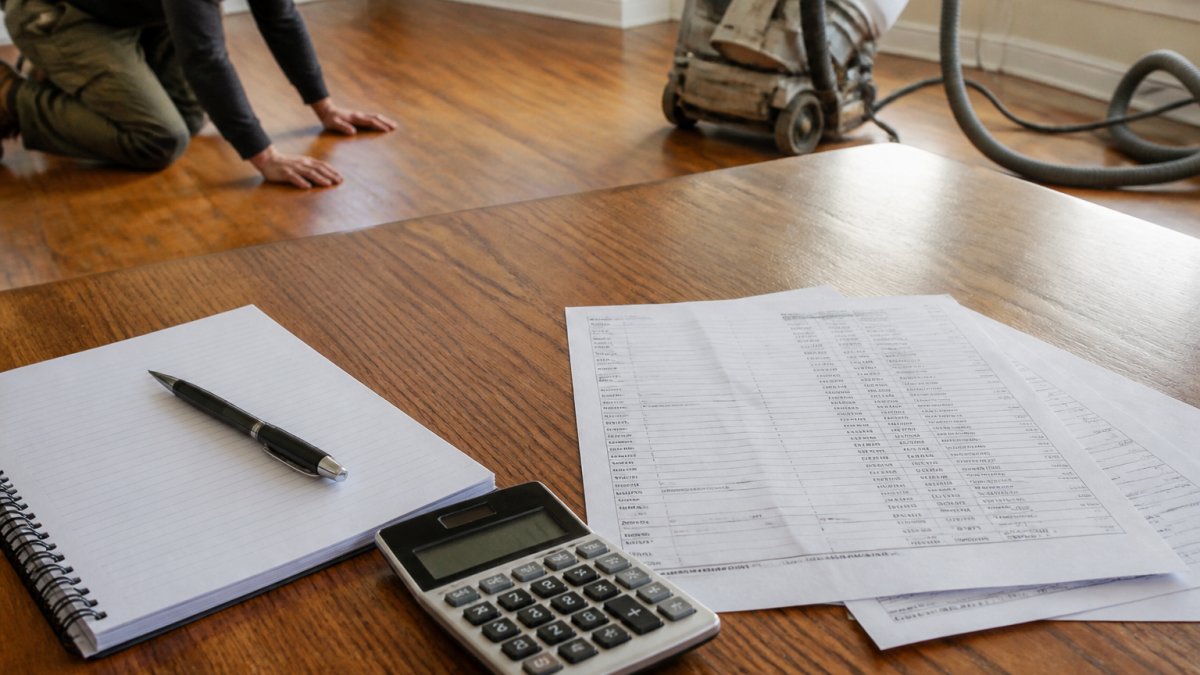
The biggest variable is repairs. Deep scratches, stains, and water damage mean extra work before sanding even starts. A simple screen-and-recoat costs far less than a full sand because it skips the heavy material removal.
Floor Condition, Repairs, and Previous Sanding
Every sanding pass removes a thin layer of wood. A floor that has been sanded several times has less left to give. We check thickness before quoting, because sanding too far exposes the tongue and ruins the floor. According to industry best practices, a professional should always measure the remaining wood thickness before beginning a refinishing project to ensure there's enough material for the process.
A common mistake is assuming any worn floor can be sanded again. If the boards are already thin, refinishing is off the table no matter how good the price looks.
Finish Type, Stain Color, and Dust Control
Finish choice moves the number more than most people expect. A basic clear coat costs less than a specialty stain or a high-build protective finish. Changing stain color adds work because the old color has to come out first.
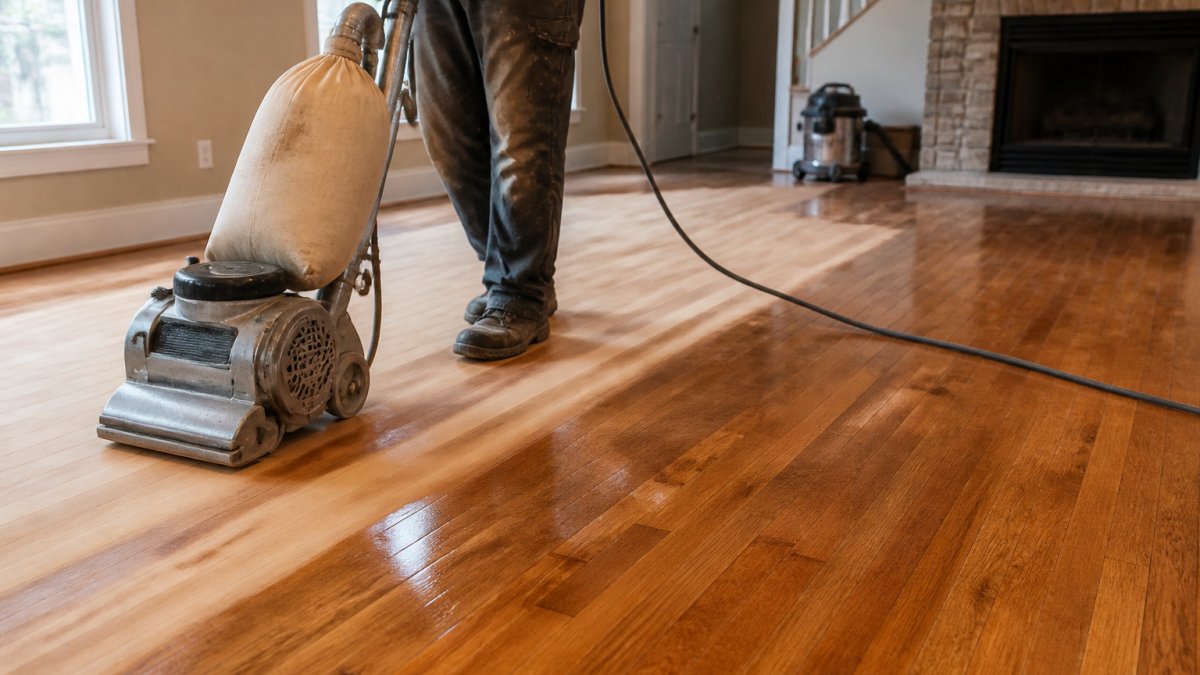
Dust control matters too. Vacuum-assisted sanding keeps airborne dust down, which matters in an occupied home. It is not a gimmick, it is the difference between living through the job and moving out for it. Many professional refinishers now use advanced dust containment systems, which can capture over 95% of airborne dust particles, significantly improving air quality during the process.
What Drives Hardwood Floor Replacement Cost
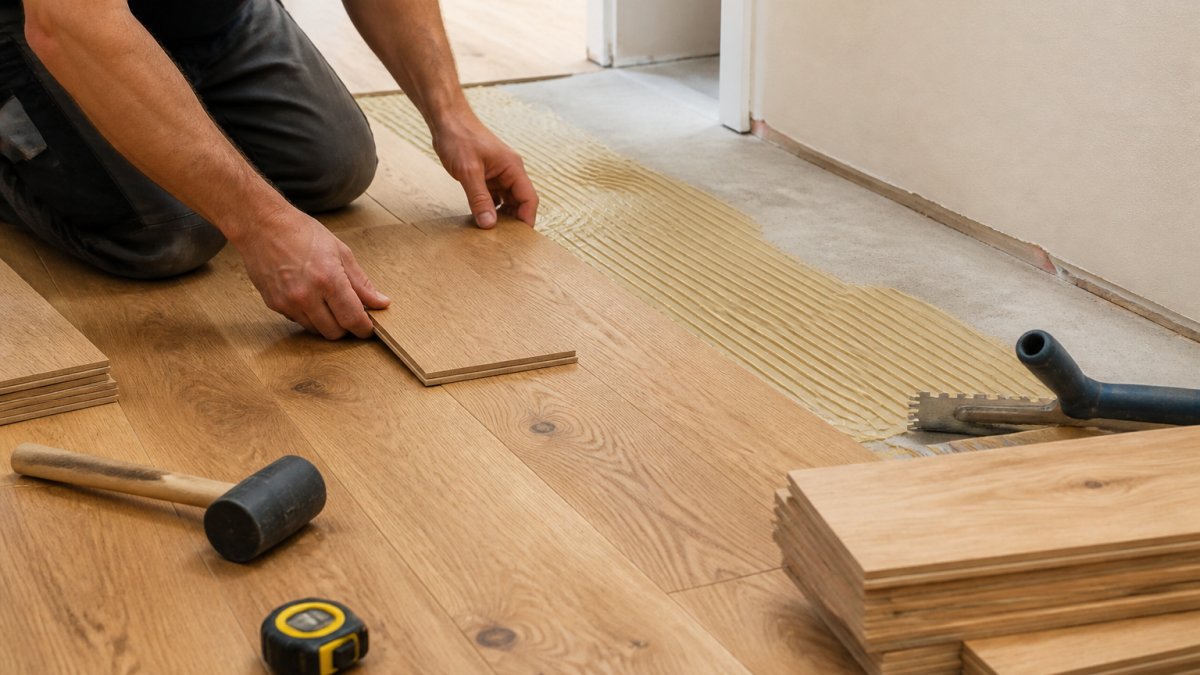
Hardwood floor replacement cost reflects removal, subfloor prep, and new material, which is why it usually runs higher than a refinish. You are paying to undo the old floor and build a new one.
Removal and disposal add labor before installation begins. Subfloor repair adds more if the base is uneven or damaged. Then you pay for new flooring, which varies widely by species and grade.
Solid vs Engineered Hardwood and Material Choices
Solid hardwood is a single piece of wood, top to bottom, and can be sanded and refinished multiple times over its life. Engineered hardwood is a real wood wear layer bonded to a plywood core. It looks the same on the surface but has less wood to work with.
Material cost follows the species. A common domestic species costs less than an exotic one. Engineered options can cost less up front, but they carry a shorter refinishing life. For instance, oak is generally more affordable than walnut or exotic hardwoods like Brazilian cherry.
Engineered Hardwood Refinishing: Wear Layer Limits and When It Works
Engineered hardwood refinishing works only when the wear layer is thick enough to sand. The wear layer is the real wood top surface, and once it is gone, the floor cannot be refinished again. Industry standards for engineered hardwood wear layers can range from 0.6 mm to over 4 mm.
Thin wear layers limit you to a light screen-and-recoat at most. Thicker wear layers can take a full sand. Before quoting, we measure the wear layer, because guessing here leads to ruined floors and angry homeowners.
Hardwood Floor Refinishing Timeline, Disruption, and Household Logistics
Hardwood floor refinishing timeline is shorter than replacement, but it still disrupts daily life. Most refinishing jobs run several days from sanding to final coat, and the finish needs time to cure before furniture goes back. For a typical 500-square-foot area, expect 3-5 days for the entire process.
Plan around the finish, not just the sanding. Stain and topcoats need drying time between passes, and foot traffic has to stay off until the final coat sets. Pets and kids need a plan.
Replacement takes longer. Removal, subfloor work, installation, and finishing stack up into a multi-week project. If you are living in the home, that timeline matters as much as the price.
Lifecycle Cost: What Each Option Costs You Over 30 Years
Over 30 years, refinishing usually costs less because it can be repeated. A solid hardwood floor can be refinished several times across its life, spreading the cost out. Replacement resets the clock but pays the full price again. That is the headline.
How often does each project recur? A solid hardwood floor in a normal residential setting typically needs a recoat every 3 to 5 years and a full refinish every 10 to 15 years, depending on traffic, pets, and maintenance. According to consumer flooring guides, recoating can extend the life of a finish by 5-7 years before a full refinish is necessary.
The cumulative cost pattern. Refinishing is a maintenance cost you spread over decades. Replacement is a one-time reset that comes with a disposal bill and a fresh install, followed by the same maintenance costs you would have had anyway.
| Time Horizon | Refinishing Path | Replacement Path |
|---|---|---|
| Year 0 | Full refinish | Removal, disposal, new install, finish |
| Year 3-5 | Recoat | Recoat |
| Year 10-15 | Full refinish | Full refinish |
| Year 15-20 | Recoat | Recoat |
| Year 20-30 | Full refinish | Full refinish |
| Cumulative | Lower total, spread out | Higher total, front-loaded |
What changes the math. A well-maintained floor with mats at entries, regular cleaning, and controlled humidity stays in refinishing range longer. A neglected floor reaches replacement sooner.
The durability trade-off. Replacement buys you new wood, but it also buys you a new maintenance cycle. Refinishing buys you more time on the wood you already have. The lifecycle winner depends on how many sanding passes your floor has left.
This is the part most comparisons skip. Refinishing is a maintenance cost you spread over decades. Replacement is a one-time reset that comes with a disposal bill and a fresh install, and then the same maintenance clock starts again.
Floor-Specific Decision Guide: Which Route Fits Your Situation
Match the floor to the route. Here is how we would decide in practice:
- Surface wear, sound boards: Refinish. This is the clear win.
- Deep scratches and stains: Refinish with targeted repairs.
- Water damage in one area: Repair affected boards, then refinish the rest to blend.
- Cupped or rotting boards throughout: Replace.
- Thin wear layer or already sanded several times: Replace, or accept a light recoat only.
For most homes we see, refinishing is the better call. It restores the character of the original floor and costs less than tearing it out. When the boards themselves are failing, replacement is the honest answer.
The real challenge is that no two floors are the same, and a generic quote cannot tell you which route yours needs. At North American Hardwood, owner Rick Trischuk brings 38 years of hands-on experience to every project, personally overseeing the work with vacuum-assisted sanding to keep dust down. We focus only on hardwood refinishing, installation, and repair, and we always look for ways to save your existing floor before recommending replacement. Request an estimate and we will tell you honestly which option your floor actually needs.
Frequently Asked Questions
Is refinishing hardwood floors cheaper than replacing them?
In most cases, yes. Refinishing works with the floor you already have, so you skip the cost of new boards, removal, and waste disposal. The gap narrows when your floor needs extensive board replacement, subfloor repair, or has already been sanded several times. Get a written quote for both options before deciding, because the answer depends on your specific floor condition rather than a general rule.
How much does it cost to refinish 1000 square feet of hardwood floors?
Pricing depends on floor condition, the number of repairs needed, finish type, and access to the space. A 1000 square foot project typically falls into a different price band than a single room because setup and finish curing are spread across more area. Ask for an itemized quote that separates labor, materials, and repairs so you can compare bids fairly. Request an estimate for your specific square footage.
How long does hardwood floor refinishing take from start to finish?
A typical residential refinishing project takes several days, not one. Sanding and prep usually take one to two days depending on square footage and repairs. Stain application adds a day if you are changing color. Each finish coat needs drying time between applications, and you should wait before moving furniture back. Plan for your household to stay off the floors during the full window.
Can engineered hardwood be refinished?
It depends on the wear layer thickness. Engineered hardwood with a wear layer of roughly 2 millimeters or more can usually be sanded and refinished at least once. Thinner wear layers leave little material to remove safely, and sanding through them exposes the core. A professional can measure your wear layer and tell you whether refinishing is viable or whether board replacement makes more sense.