 how-to
How to Hire a Local Hardwood Floor Specialist
Last Updated: October 25, 2026
Quick Summary
Hire a local hardwood floor specialist by vetting credentials first, then scope, then price. Confirm they work exclusively on hardwood, verify liability insurance and provincial workers' compensation clearance, and get a written estimate covering scope, species and finish, prep and dust control, timeline, payment schedule, and warranty. Choose the specialist who can diagnose whether your floor can be repaired before replacing it.
- Ask how long they have worked exclusively on hardwood and which species and finishes they handle.
- Call the insurer named on the certificate to confirm the policy is active and covers the work.
- A complete estimate must list scope, species and finish, prep and dust control, timeline, payment schedule, and warranty.
- Spot repair suits isolated damage like a few water-damaged boards or a deep gouge; widespread failure points to replacement.
- Treat a phone quote given without seeing the floor as a stop sign.
Table of Contents
- Why a Local Hardwood Floor Specialist Beats a General Contractor
- Hardwood Flooring Contractor Questions to Ask Before You Hire
- How to Read a Hardwood Floor Repair Estimate
- When Spot Repair Hardwood Floors Makes More Sense Than Replacement
- What Hardwood Floor Refinishing Involves and How Long It Takes
- Red Flags That Signal the Wrong Specialist
- Requesting an Estimate from North American Hardwood
- Frequently Asked Questions
Why a Local Hardwood Floor Specialist Beats a General Contractor
Hiring a local hardwood floor specialist means choosing a tradesperson whose entire business is wood floors, not one who adds flooring to a long list of renovation services.
A general contractor can coordinate a renovation, but coordination is not craftsmanship. When a floor starts cupping, squeaking, or showing water stains, the fix depends on reading the wood itself. Is the damage surface-level or structural?
The stakes are practical. A poorly repaired floor shows every mistake, and a bad refinish can remove too much surface thickness. A specialist protects the floor you already have.
Hardwood Flooring Contractor Questions to Ask Before You Hire
The best way to separate a true specialist from a generalist is a short, pointed interview, but the interview only works if you run it in the right order. Most homeowners ask about price first and qualifications last, which lets a smooth talker control the conversation. Reverse that. Vet credentials, then scope, then money.
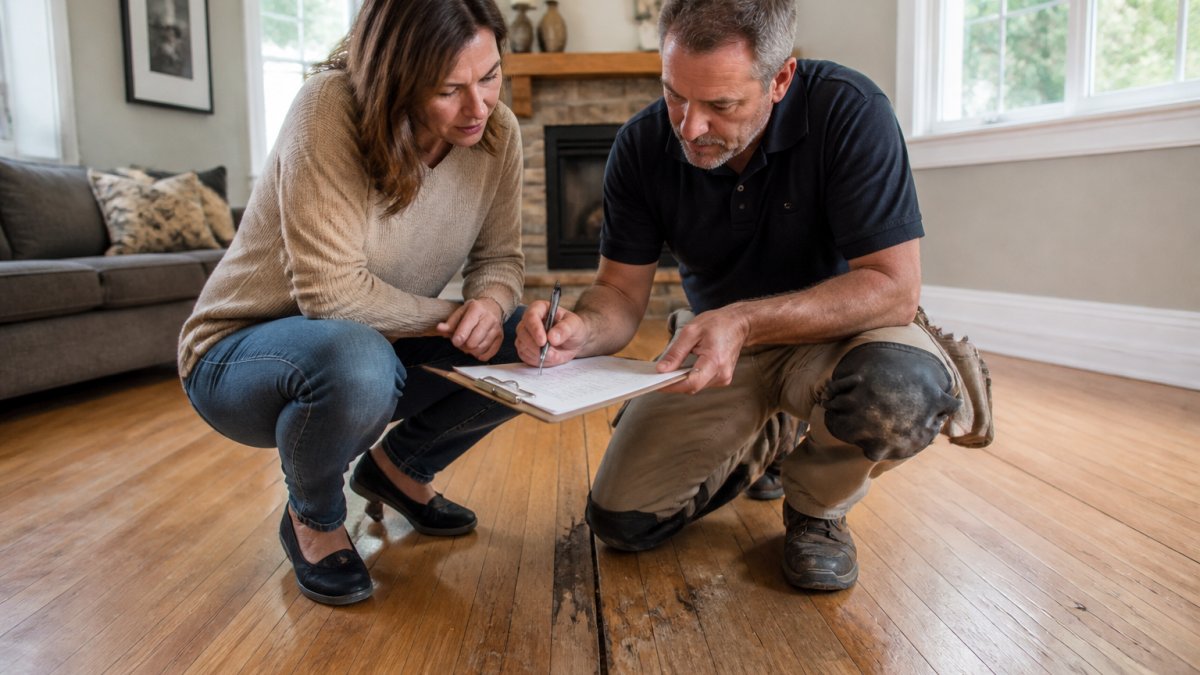
Step 1: Confirm they are a hardwood specialist, not a generalist
- How long have you worked exclusively on hardwood? General renovation experience is not the same as floor-specific experience. Listen for a number of years and a description of the work, not a vague "many years."
- What species and finishes do you handle? A specialist should name the species common to your region, oak, maple, ash, birch, and explain how each behaves under humidity swings. If they cannot describe how a species moves with the seasons, they are not a hardwood specialist.
- Who actually does the work? Ask whether the owner or a named crew is on site, or whether the job gets subcontracted. Subcontracting is not automatically bad, but you should know who is on your floor and whether they carry their own coverage.
Step 2: Verify licensing, insurance, and coverage before you discuss scope
Verification is where many homeowners skip steps, and it is where problems hide. Ask for the contractor's business registration and proof of liability insurance, then confirm the coverage is current by contacting the insurer directly. In Canada, provincial worker protection coverage matters too: ask for a clearance letter showing the business is in good standing with its provincial workers' compensation board. A legitimate flooring company will hand these over without hesitation.
Step 3: Pin down scope, process, and warranty in writing
- Will you repair or replace? A good specialist explains why restoration is often the better path and shows you the boards that justify the call.
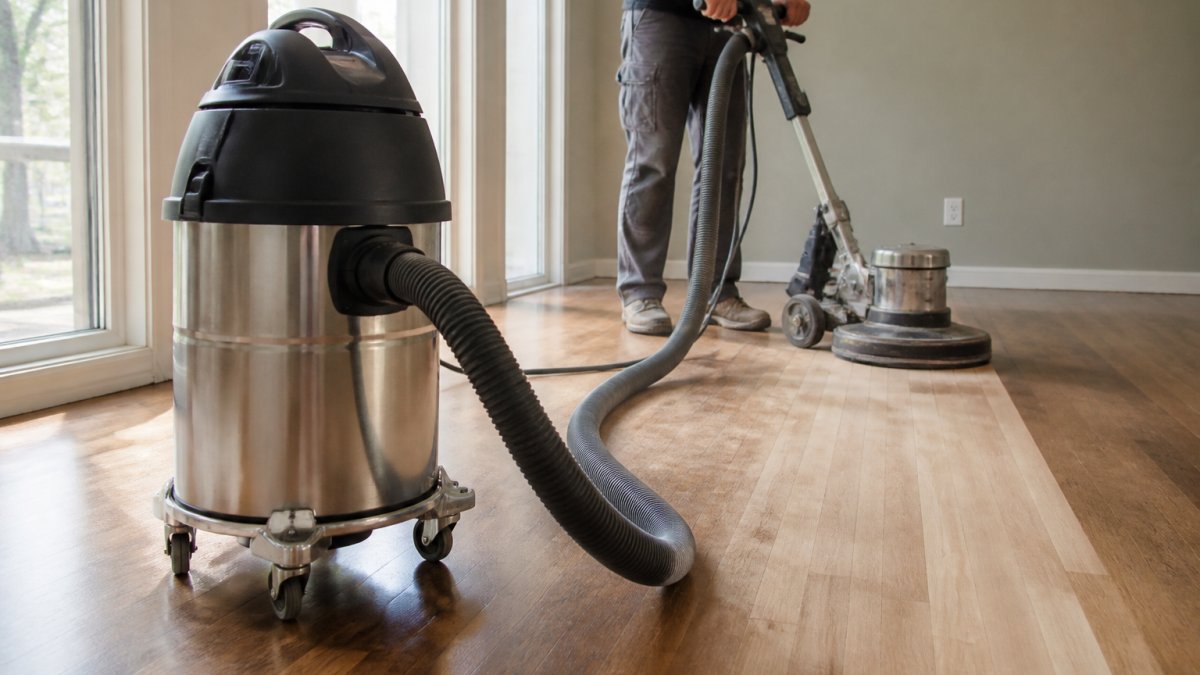
- How do you control dust? Vacuum-assisted sanding is the standard to look for, especially if anyone in the home has allergies. Ask what containment they use on doorways and returns.
- What does your workmanship warranty cover, and for how long? Get it in writing, confirm what voids it, and check whether it covers labor as well as materials. A warranty that only covers the product, not the installation, leaves you exposed if the boards were fitted wrong.
Step 4: Ask the questions that reveal how they handle problems
- What happens if a board fails after the job? A specialist describes a return visit and a remedy. A generalist changes the subject.
- Can you give me two recent references for jobs like mine? Ask for jobs of similar scope, not just any happy customer.
- What is your payment schedule? A large deposit before any material is ordered is a red flag. Progress payments tied to milestones are the norm.
A specialist who cannot explain their process in plain language is telling you something. Listen to it.
How to Read a Hardwood Floor Repair Estimate
A hardwood floor repair estimate should tell you exactly what will be done, to which boards, and why. If you cannot picture the job after reading it, the quote is too vague to trust. Request a written quote, not a verbal number, and compare every line item across contractors using the same framework.
The six lines every complete estimate must contain
- Scope of work, which rooms, which boards, and whether the job is repair, weave-in, or full replacement of a section.
- Species and finish, the exact product and sheen, not just "matching finish."
- Prep and dust control, furniture moving, baseboard removal and reinstall, and the sanding method.
- Timeline, start date, working days, and curing time before furniture returns.
- Payment schedule, deposit, progress payments, and final payment tied to completion.
- Warranty terms, what is covered, for how long, and what voids it.
If any of those six lines is missing, the estimate is incomplete regardless of the total.
How to compare two estimates side by side
Put both quotes on the same page and compare them line by line, not bottom line to bottom line. A cheaper quote that excludes prep work, uses a lower-grade finish, or omits baseboard reinstall is not actually cheaper, it is a smaller job. Ask each contractor to confirm, in writing, whether furniture moving, baseboard removal and reinstall, and disposal of old material are included.
Spotting hidden costs and vague line items
Hidden costs rarely announce themselves. They appear as exclusions buried in fine print or as "additional work billed at hourly rate" with no ceiling. Ask directly: is stain matching included, or billed as a second visit?
Watch for lump sums like "floor repair: as discussed" with no breakdown. That phrasing hides labor cost, material cost, and the real extent of the work. A specialist who cannot break the job into its parts either has not scoped it or does not want you to see the scope.
Every complete hardwood floor repair estimate should contain these six lines, regardless of the total.
| Line item | What it must state |
|---|---|
| Scope of work | Rooms, boards, and repair, weave-in, or section replacement |
| Species and finish | Exact product and sheen, not just matching finish |
| Prep and dust control | Furniture moving, baseboard removal and reinstall, sanding method |
| Timeline | Start date, working days, curing time before furniture returns |
| Payment schedule | Deposit, progress payments, final payment tied to completion |
| Warranty terms | What is covered, for how long, and what voids it |
When Spot Repair Hardwood Floors Makes More Sense Than Replacement
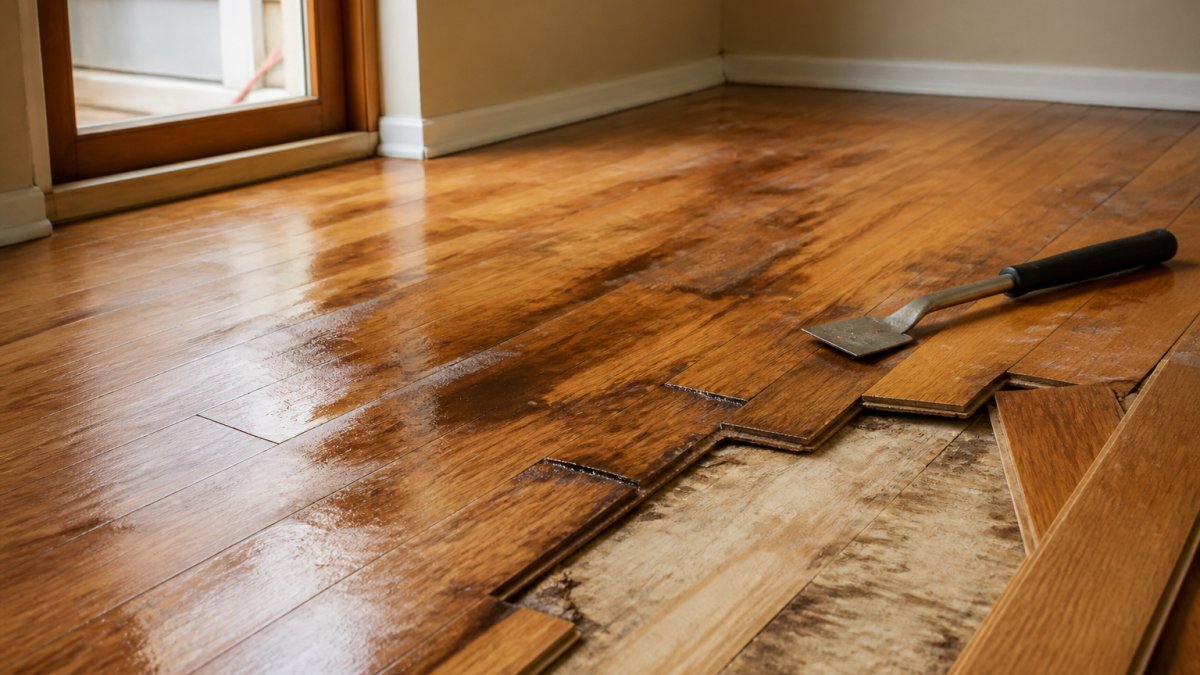
Spot repair hardwood floors when the damage is isolated: a few water-damaged boards, a deep gouge, or a small section worn through. Replacing an entire floor because of a localized problem throws away sound material and money.
Replacement makes more sense when damage is widespread, when boards are structurally failing across a large area, or when the floor has been sanded so many times that refinishing is no longer safe. The judgment call is exactly what you are paying a specialist for.
What Hardwood Floor Refinishing Involves and How Long It Takes
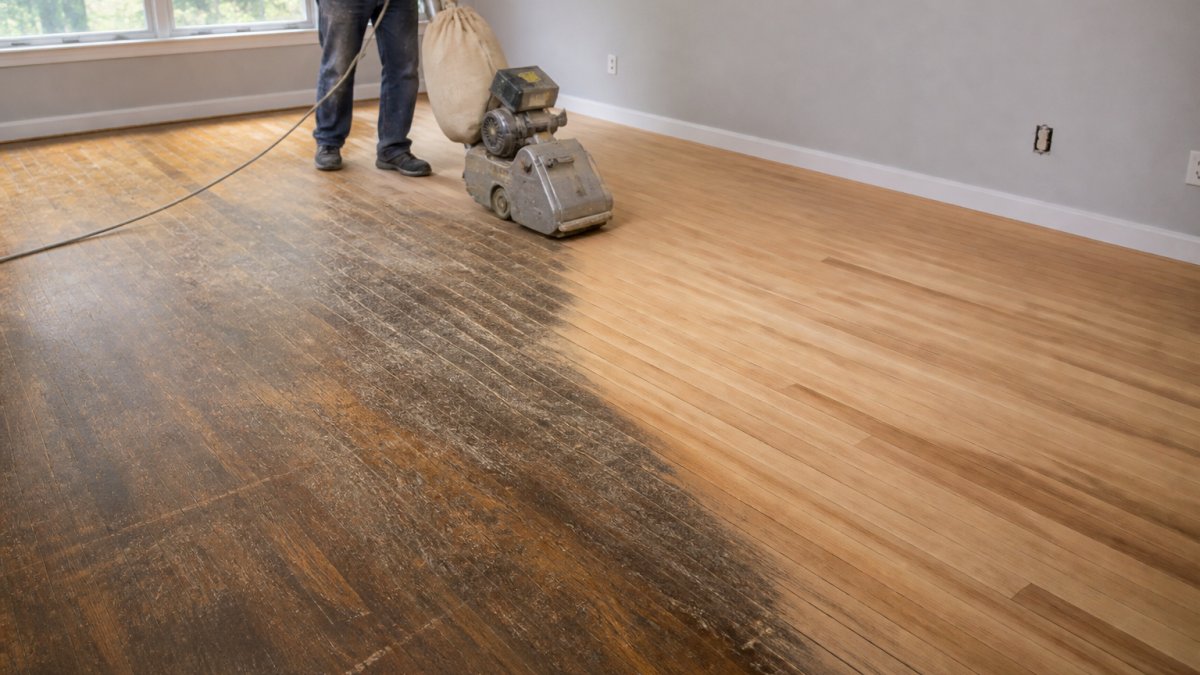
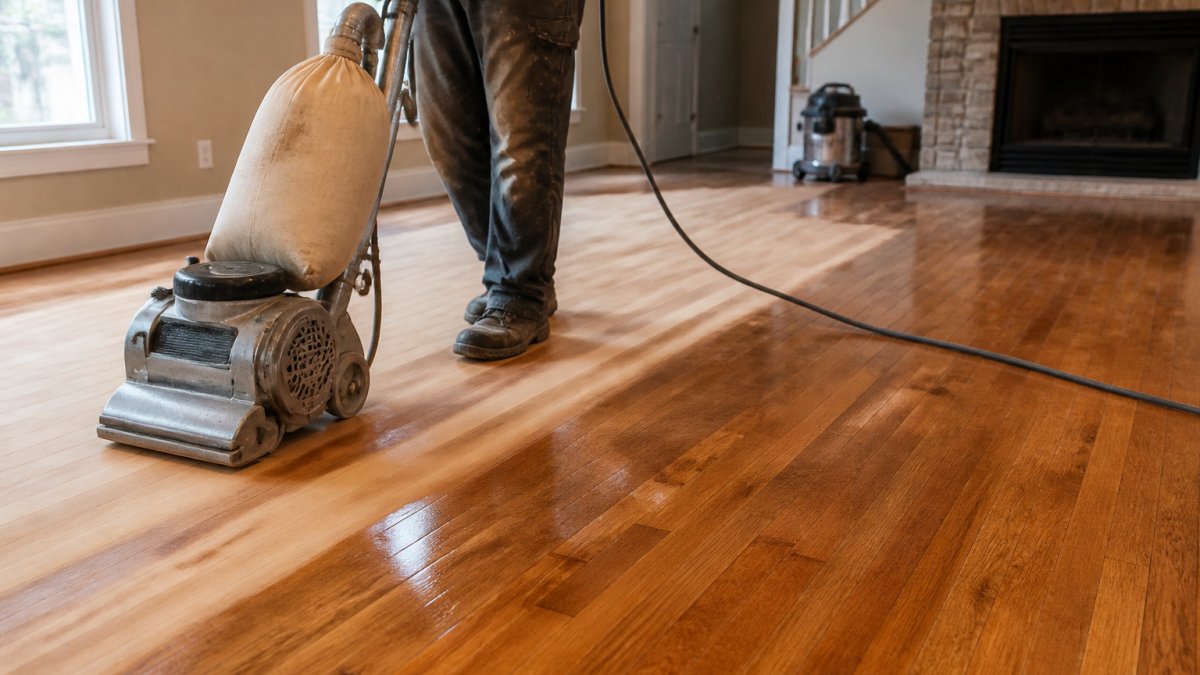
Hardwood floor refinishing is the process of sanding away the worn top layer and applying fresh finish to restore the floor's appearance and protection.
The process typically runs in stages: preparation and furniture removal, sanding through progressively finer grits, edge and corner work, staining if a color change is wanted, and applying multiple finish coats with drying time between each.
Expect to stay off the floor during application and curing. Plan the timeline with your contractor up front so the disruption does not catch you off guard.
Red Flags That Signal the Wrong Specialist
The wrong specialist is usually visible before the first board is sanded. Treat these as stop signs.
- A quote given over the phone without seeing the floor.
- No written contract, or a contract with no scope, timeline, or warranty.
- Reluctance to provide insurance or workers' compensation clearance.
- Pressure to replace when repair would clearly work.
- No dust-control plan, especially with allergies in the home.
- Vague answers about who will actually do the work.
A specialist who cannot explain their process in plain language is telling you something. Listen to it.
Requesting an Estimate from North American Hardwood
The final step is simple: get a written estimate from a specialist who will look at your floor before quoting. At North American Hardwood, owner Rick Trischuk personally oversees every project, backed by 38 years of hands-on experience and an exclusive focus on hardwood refinishing, installation, and repair.
Best for: homeowners with worn, scratched, or water-damaged hardwood who want a specialist's diagnosis before committing to replacement.
Skip if: you need a full renovation crew handling multiple trades at once; we work on hardwood only.
Frequently Asked Questions
How do I find a reliable hardwood floor specialist?
Start by confirming the contractor works exclusively or primarily on hardwood, not general renovations. Ask for proof of licensing and insurance, and request two or three local references from jobs similar to yours. Read recent customer reviews and check how long the business has operated. A specialist with proven experience should be able to explain species-specific sanding and finishing choices on the spot. Compare at least two written quotes before committing, and ask each contractor what their workmanship warranty covers.
What should a hardwood floor repair estimate include?
A proper hardwood floor repair estimate lists the scope in detail: which boards or areas are affected, whether replacement boards will be woven in or patched, species and grade of matching material, sanding and finishing steps, and cleanup. It should state labour and material costs separately, note any contingency for hidden damage found during removal, and give a timeline. Ask whether the price includes dust control and floor protection. Vague one-line quotes make it hard to compare contractors fairly.
Can a hardwood floor specialist repair only one damaged area?
Yes. Spot repair hardwood floors is common for isolated scratches, water-damaged boards, or a single gouge. A specialist can cut out damaged boards and weave in matching material, then sand and blend the repaired area into the surrounding floor. The result depends on how well the new boards match the existing species, grain, and aged colour. On older floors, a full refinishing may blend better, so ask the specialist to assess whether spot repair will look seamless before you decide.
How long does hardwood floor refinishing take?
Most residential refinishing projects take several days from sanding to final coat, depending on square footage, the number of coats, and drying time between them. You will need to stay off the floor while finishes cure, and furniture should remain off it longer. Ask your contractor for a written schedule that includes sanding, staining, sealing, and cure times, plus how dust will be controlled. Vacuum-assisted sanding reduces airborne dust but does not eliminate the need to protect adjacent rooms.
Your floor has a story, and it usually deserves restoration before replacement. If you want a straight answer about what your hardwood actually needs, get an estimate from North American Hardwood. We will assess the species and condition, explain your repair and refinishing options, and give you a written quote with no guesswork. Get started with North American Hardwood and bring the character back to your floors.