 blog
Refinishing vs Replacing Hardwood Floors: Which to Choose
Last Updated: November 1, 2026
Quick Summary
The refinishing vs replacing hardwood floors decision comes down to whether enough sound wood remains to sand. Refinishing costs roughly a quarter to half the price of replacement and keeps the original wood, but it only works when boards are solid, flat, and thick enough for another sanding pass.
- Solid hardwood is a single piece of wood; engineered hardwood has a thin wear layer that limits sanding.
- Solid hardwood is commonly 19 mm thick, while engineered planks are often 10-15 mm.
- Replacement adds demolition, disposal, new material, and trim costs that refinishing avoids.
- Both options share sanding and finishing labor, so the labor gap is smaller than expected.
- Replacement wins when boards are cracked through, rotted, or cupped below usable thickness.
Table of Contents
- Refinishing vs Replacing Hardwood Floors: The Core Differences
- How to Tell If Your Floor Can Be Sanded: An Inspection Checklist
- Hardwood Floor Refinishing Cost Compared to Replacement
- Signs Hardwood Floors Need Replacing Rather Than Refinishing
- How Many Times Can Hardwood Floors Be Refinished?
- How Long Does It Take to Refinish Hardwood Floors?
- Repair Options Between Refinishing and Full Replacement
- Request an Estimate for Your Floors
- Frequently Asked Questions
Refinishing vs Replacing Hardwood Floors: The Core Differences
The refinishing vs replacing hardwood floors decision comes down to one question: is there enough sound wood left to sand?
Most homeowners assume replacement is the safer bet. In practice, it's the more expensive bet, and it's often unnecessary. Refinishing costs a fraction of replacement and keeps the original wood, which is usually better stock than anything you can buy today.
What Refinishing Actually Removes and Restores
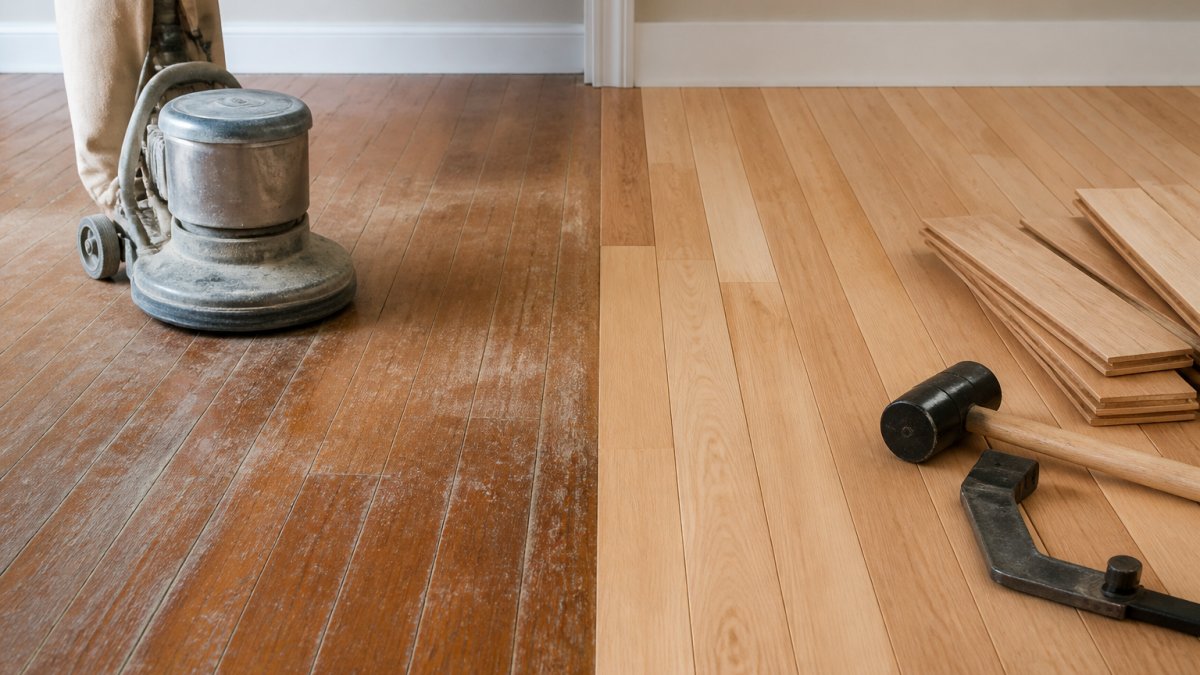
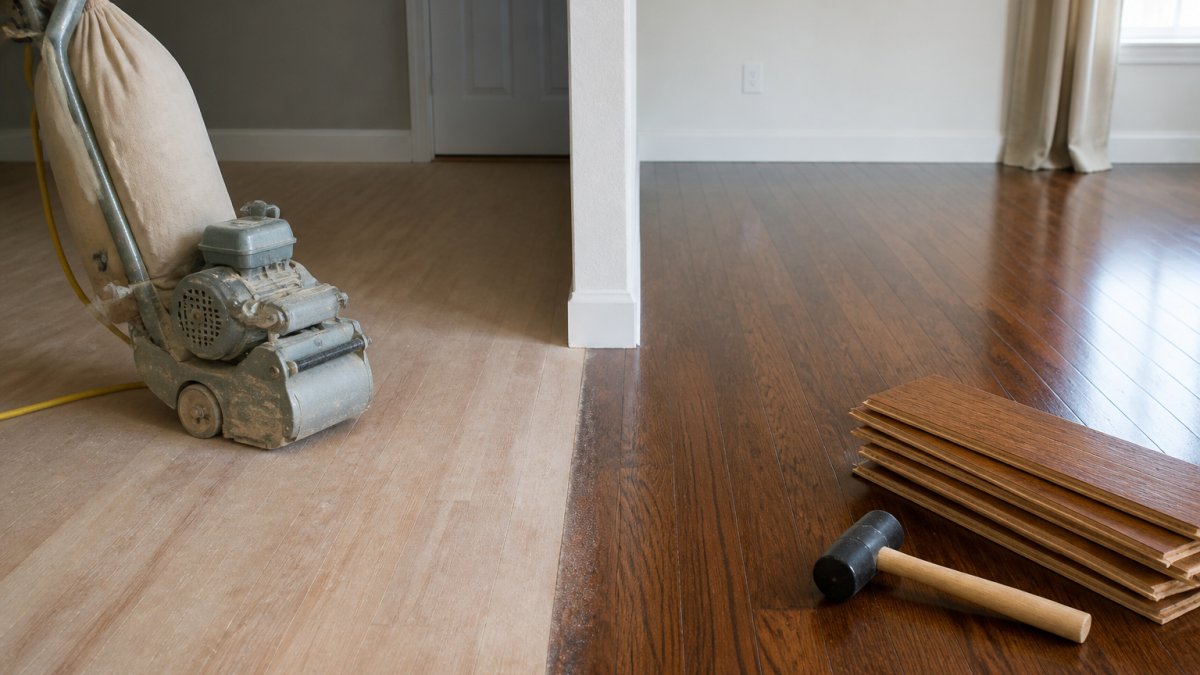
Refinishing removes the worn finish, surface scratches, and a fraction of a millimeter of wood. It restores the protective coating, the color, and the sheen. Deep gouges, water stains that have penetrated, and warped boards survive the process, which is why an honest inspection comes first. For the full sequence, see our step-by-step refinishing guide.
What Replacement Involves From Demolition to Installation
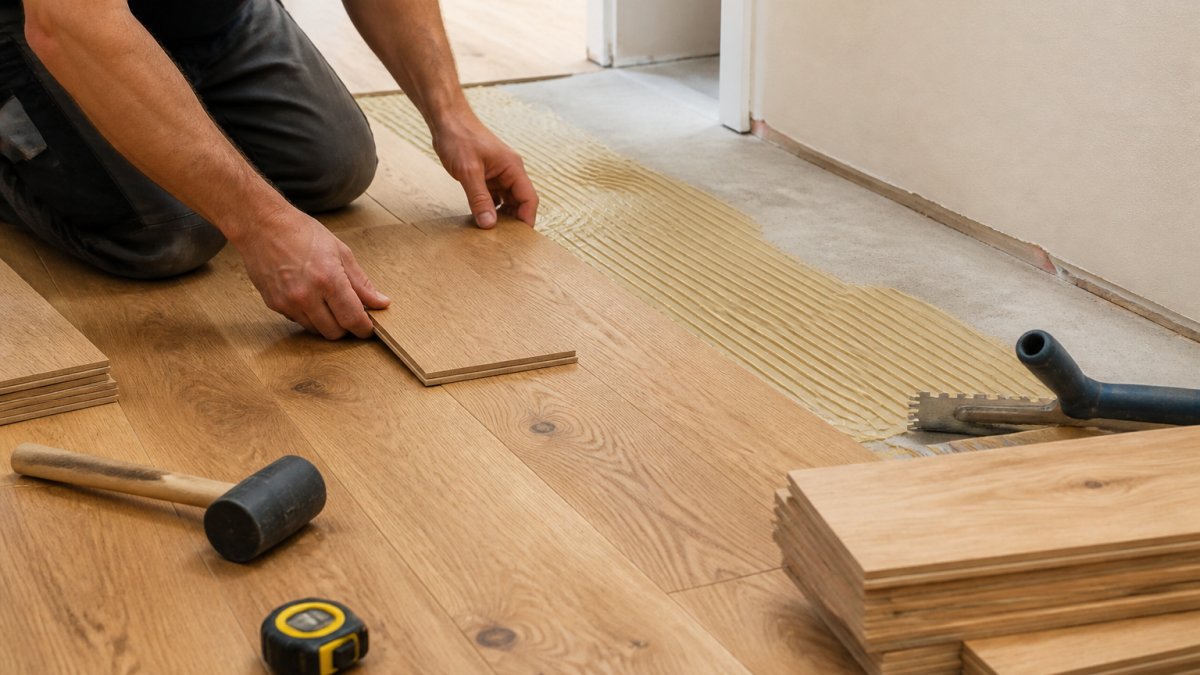
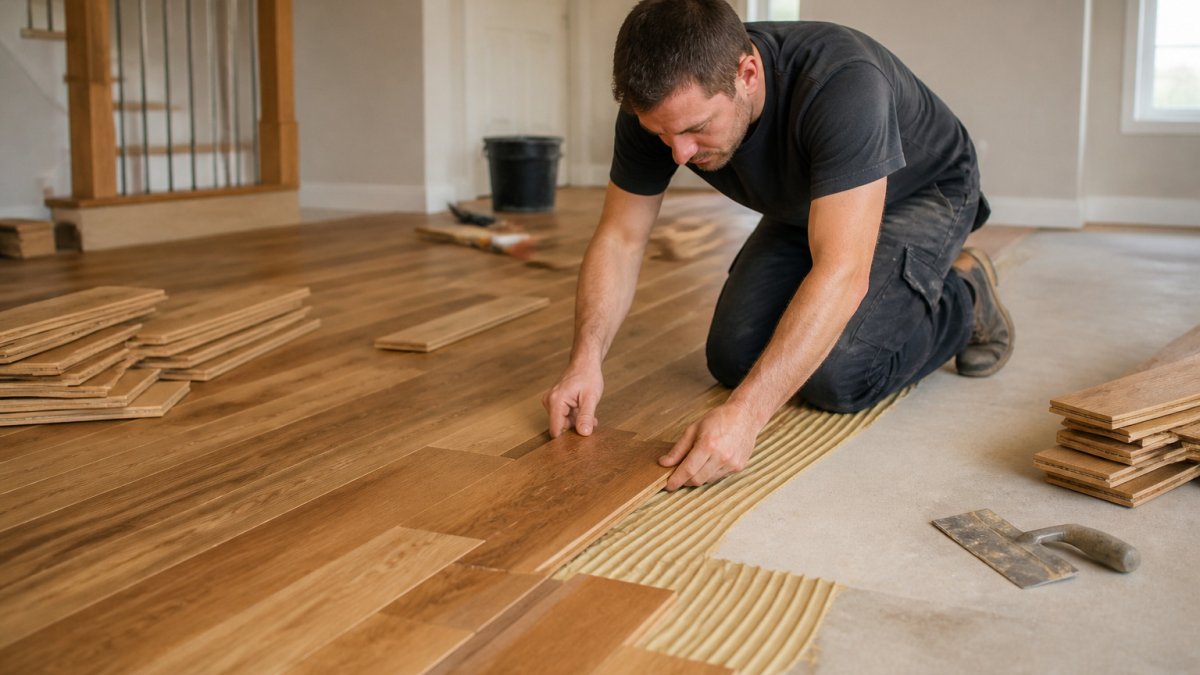
Replacement means demolition, subfloor inspection, new material, and installation. It gives you a new floor with a new lifespan, and it's the right call when the existing wood is too thin or too damaged to save. It also costs more, takes longer, and sends usable wood to waste.
How to Tell If Your Floor Can Be Sanded: An Inspection Checklist
The answer is yes if the boards are solid, flat, and thick enough to sand again. The only reliable way to know is to inspect and measure, not to guess from the surface. Here is the checklist we run before quoting any refinishing job, with the specific thresholds and tests that separate a refinishable floor from one that is past saving.
Step 1: Identify Solid vs. Engineered Hardwood
This single distinction decides most of the question. Solid hardwood is a single piece of wood and can often be refinished more than once, depending on its thickness. Engineered hardwood is a plywood core topped with a thin wear layer of real wood, and its sanding life is limited by that wear layer.
How to tell them apart without pulling up a board:
- Look at a floor register or transition. Remove a vent cover or look at the floor where it meets a different room. Solid boards show continuous wood grain through the full thickness. Engineered boards show a visible layered core under the wear layer.
- Check the tongue. At a transition or loose board, solid wood has a tongue milled from the same piece. Engineered tongues are usually part of the core, not the wear layer.
- Measure the thickness at a doorway. Solid hardwood is commonly 19 mm; engineered planks are often 10-15 mm and sometimes thinner.
Step 2: Measure Remaining Sanding Depth
For solid wood, a specialist will check that enough usable thickness remains above the tongue before another sanding pass. Below that, the sander risks cutting into the tongue-and-groove joint and weakening the floor.
For engineered wood, the wear layer is the limit.
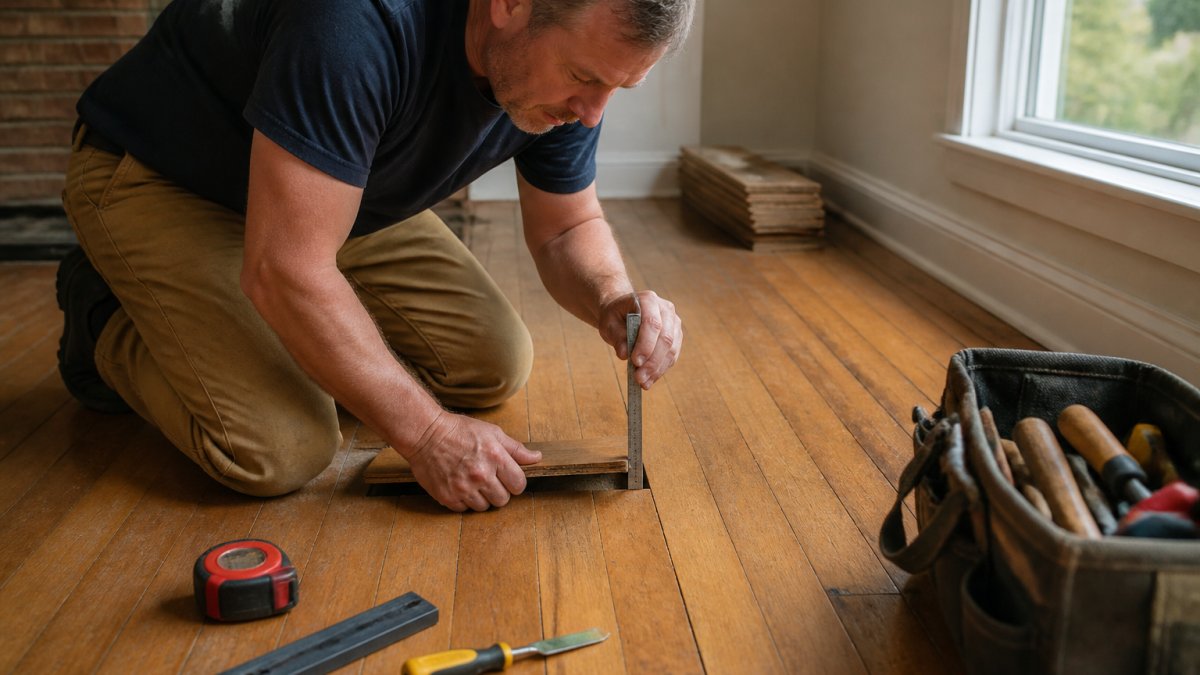
Measure at a floor vent, a doorway transition, or by lifting a loose board. A small ruler or caliper is enough.
Step 3: Check Flatness and Moisture
- Cupping and crowning. Boards that curve up at the edges (cupping) or bulge in the middle (crowning) signal moisture imbalance. Mild cupping can sometimes be sanded flat; severe cupping means sanding would remove too much thickness.
- Rocking boards. Boards that move underfoot indicate loose fasteners or a subfloor issue that must be fixed before sanding.
- Squeaks. Squeaks usually mean movement between boards and subfloor; fasten and repair before any sanding starts.
Step 4: Test for Deep Damage
- Water stains. Dark stains that have soaked through the surface will not sand out. Light surface stains often will.
- Deep gouges and cracks. Damage that penetrates below the wear surface survives sanding. Individual boards can be replaced and blended.
- Rot and soft spots. Soft wood, crumbling edges, or a musty smell point to moisture damage that replacement or localized repair must address.
Step 5: Confirm the Species and Finish
Softer species such as pine and some maples sand unevenly and need a gentler touch and finer grit sequence. Very hard species take longer to sand but hold a finish well. Knowing the species also tells you how the floor will take a new stain.
Hardwood Floor Refinishing Cost Compared to Replacement
Refinishing generally costs less than replacement because you are paying for labor and finish, not new material. A common industry rule of thumb puts refinishing at roughly a quarter to half the price of full replacement, according to Fabulous Floors' refinishing cost comparison, though local pricing varies. That range is useful for a first sanity check, but it is too broad to budget from.
The Like-for-Like Cost Worksheet
Use this worksheet to build a total for each option. Fill in your own square footage and local rates; the categories are what matter.
| Line item | Refinishing | Replacement |
|---|---|---|
| Furniture moving and storage | Yes, move and protect | Yes, move out and store |
| Demolition and tear-out | No | Yes, labor plus dumpster |
| Disposal fees | Minimal (dust, old finish) | Yes, wood waste, old underlay |
| New material | Finish, stain, sealer only | New boards plus trim and transitions |
| Subfloor inspection and repair | Sometimes, fix loose boards | Almost always, level and repair |
| Board repair or patching | Yes, damaged boards replaced | Not applicable (all new) |
| Sanding labor | Yes, multiple grits | Yes, new floor still sanded and finished |
| Finishing labor and materials | Yes, stain and coats | Yes, stain and coats on new floor |
| Transitions and trim | Reuse existing where possible | New transitions, baseboard, shoe mold |
| Dust containment and cleanup | Yes, contained sanding | Yes, heavier debris |
| Cure and return-to-use time | Days | Weeks |
Two patterns stand out when you fill this in. First, replacement carries several line items refinishing does not: demolition, disposal, new material, and new trim. Second, both options share sanding and finishing labor, so the labor gap is smaller than most homeowners expect, the material and tear-out lines are where replacement pulls ahead in cost.
What Drives the Refinishing Quote
- Square footage. The dominant variable; larger floors lower the per-square-metre rate.
- Floor condition. Heavy finish buildup, many board repairs, and pet stains add labor.
- Number of coats. Three coats cost more than two but last longer.
What Drives the Replacement Quote
- Material choice. Species, grade, width, and engineered versus solid drive the biggest line.
- Demolition and disposal. Tear-out, dumpster rental, and disposal fees.
- Subfloor repair. Leveling, patching, or replacing subfloor adds cost.
A Worked Example With Transparent Assumptions
Rather than quote a flat rate, here is how the math works with placeholder assumptions you can replace with local numbers. For a 500 sq ft room:
- Refinishing: labor for sanding and finishing, finish and stain materials, minor board repairs, and furniture moving. No demolition, no disposal, no new boards.
- Replacement: the same sanding and finishing labor, plus demolition, disposal, new material for 500 sq ft plus waste factor, new trim, and subfloor prep.
The replacement total is consistently higher, and the gap widens as material grade rises. The refinishing total rises mainly with floor condition and coat count. That is why the quarter-to-half rule of thumb holds in many cases but breaks down on small rooms with extensive repairs or on large rooms with premium new material.
For a detailed cost breakdown, read our refinishing vs replacement cost guide.
Signs Hardwood Floors Need Replacing Rather Than Refinishing
Replacement wins when the wood itself has failed, not just the finish. Watch for boards that are cracked through, rotted from moisture, or cupped badly enough that sanding would flatten them below usable thickness. If a large share of the floor is damaged, patching stops making sense. As District Floor Depot's flooring guidance notes, replacement can be more cost-effective once damage is extensive.
How Many Times Can Hardwood Floors Be Refinished?
Solid hardwood can often be refinished several times over its life, depending on its original thickness and earlier sanding. Engineered hardwood is limited by its wear layer, so its number of refinishing passes is more restricted. The honest answer comes from measuring, not guessing. A specialist checks remaining depth before recommending another sanding.
How Long Does It Take to Refinish Hardwood Floors?
Refinishing projects typically take several days from sanding to final coat, with drying time between coats and a longer cure before furniture goes back. How long it takes to refinish hardwood floors depends on square footage, coats, humidity, and finish type. Our dust-free refinishing process guide explains the timeline in detail.
Repair Options Between Refinishing and Full Replacement
Sometimes you don't need either extreme. Individual damaged boards and water-damaged areas can be repaired, as one of the services North American Hardwood provides. New hardwood has been integrated into a home's existing floor after water damage affected part of the space. For board-level fixes, see our water-damaged board repair guide.
Request an Estimate for Your Floors
The right call depends on your floor, not a generic rule. At North American Hardwood, owner Rick Trischuk personally oversees the work, and vacuum-assisted sanding is used to control dust. We focus exclusively on hardwood flooring. If you're unsure which way to go, read our guide to hiring a local hardwood specialist, then get a straight answer on your floor.
Frequently Asked Questions
Is it cheaper to refinish hardwood floors than to replace them?
In most cases yes, because refinishing reuses the boards you already have and skips demolition, disposal, and new material. The gap narrows when the floor needs extensive board replacement or patching before sanding. Get an itemized quote for both paths so you compare like for like: sanding and finishing versus removal, subfloor prep, and new flooring. A floor that only needs screening and recoating sits at the low end, while a full sand-down with stain sits higher.
How do I know if my hardwood floors can be refinished?
Check three things: the wood type, the remaining sanding depth above the tongue, and the extent of the damage. Solid hardwood usually has enough thickness for at least one more sanding. Engineered hardwood depends on its wear layer, which is often too thin to sand. Cupped, warped, or water-swollen boards and widespread structural damage point toward replacement. A professional inspection confirms what the surface alone cannot show.
Can I stay in my house while floors are refinished?
Many homeowners do, but plan around the finish. Sanding generates dust even with vacuum-assisted equipment, and oil-based finishes produce strong odors and need drying time before furniture goes back. Water-based finishes dry faster and smell less. Keep children and pets off the fresh finish for the recommended cure window, and expect a few days where some rooms are unusable. Discuss the schedule with your contractor before work starts.
How long does it take to refinish hardwood floors?
A typical single room takes a few days from sanding through final coat, while a whole main floor often runs about a week depending on square footage, number of coats, and drying time between them. Water-based finishes shorten the wait; oil-based finishes add days. Furniture removal, curing time before rugs and heavy items go back, and any board repairs all extend the timeline. Your contractor can give a realistic schedule once they see the floor.
The refinishing vs replacing hardwood floors decision deserves a professional inspection, not a guess. North American Hardwood brings 38 years of hands-on experience, direct access to the owner on every job, and vacuum-assisted sanding that keeps your home livable during the work. Get started with North American Hardwood and request an estimate for your floors.